
Anxiety Treatment in San Diego, CA
Worthy Wellness Center offers a full continuum of boutique addiction and mental health treatment where trauma-informed care, a healing environment, and a team that genuinely shows up combine to help people transform from the inside out.
Speak with a Mental Health Admissions Specialist
Compassionate Anxiety Treatment in Carlsbad, California
Anxiety is not simply excessive worry — it is a full-body, nervous-system condition that shapes how a person thinks, feels, moves through the world, and relates to everyone around them. At Worthy Wellness Center in Carlsbad, our anxiety treatment program approaches the condition with the clinical depth it requires — addressing the neurological, physiological, psychological, and relational dimensions of anxiety simultaneously, not in isolation from one another.
Many of our clients arrive having managed anxiety for years through avoidance, overwork, substance use, or sheer willpower — strategies that work until they stop working. Others are navigating anxiety that has become entangled with trauma, depression, or substance use in ways that require a dual diagnosis approach to address effectively. Whatever the presentation, our clinical team builds a treatment plan around your specific history rather than a generalized anxiety protocol.
Anxiety does not look the same in every person. Panic attacks, persistent worry, social avoidance, physical symptoms like chest tension and fatigue, and the inability to be present in daily life are all different expressions of the same underlying dysregulation. Our program is designed to address what is actually driving the anxiety in each client — not just manage its surface symptoms.
When Anxiety Has Begun to Interfere With Your Life
Recognizing the Signs
Anxiety often builds quietly — and many people do not seek help until it has already significantly disrupted their relationships, their work, and their sense of self. Emotionally, it can feel like a brain that will not stop, a constant current of worry or dread that persists regardless of circumstances. Physically, anxiety often shows up as fatigue that does not improve with rest, tension in the chest or shoulders, headaches, or digestive symptoms that seem disconnected from any obvious cause.
Behaviorally, anxiety frequently manifests as avoidance — canceled plans, delayed decisions, difficulty completing work, or an inability to tolerate uncertainty that makes normal daily functioning increasingly difficult. Many people wait far too long to seek help, held back by shame, cultural expectations, or the belief that what they are experiencing is not severe enough to warrant treatment. At Worthy Wellness, we meet clients wherever that line actually is — not where they think they should be before asking for help.

Evidence-Based Anxiety Treatment at Worthy Wellness
Our anxiety treatment program draws from a broad range of evidence-based psychotherapies selected individually for each client. CBT helps identify and reframe the thought patterns that sustain anxious cycles. DBT builds emotional regulation and distress tolerance skills for clients who feel emotionally overwhelmed or reactive. Acceptance and Commitment Therapy supports clients in moving forward with valued living even when anxiety is present rather than waiting for it to disappear first.
For clients whose anxiety is rooted in trauma or nervous system dysregulation — which is the case for a significant proportion of people with persistent anxiety — trauma-focused modalities are essential. EMDR processes the traumatic memories that feed the threat response. Somatic experiencing works with the body to release stored tension and restore a physiological sense of safety. Polyvagal-informed therapy and affect regulation build the nervous system capacity for calm that anxiety chronically undermines.
Advanced options including TMS therapy and vagus nerve stimulation are available for clients with treatment-resistant anxiety or significant nervous system dysregulation. Genetic testing informs medication decisions where SSRIs, SNRIs, or other pharmacological support are part of the clinical plan — reducing trial-and-error prescribing and improving treatment response from the outset.

Get Instant Insurance Verification

Your information is private and secure. No pressure to commit
Or pick up the phone and call us
24 hours a day, 7 days a week.
Holistic Support for Anxiety Recovery in San Diego
At Worthy Wellness, anxiety treatment extends well beyond therapy sessions. Holistic modalities including yoga, mindfulness, breathwork, meditation, sound healing, nutritional counseling, and fitness programming address the physical and regulatory dimensions of anxiety that talk therapy cannot fully reach. These practices build the resilience, body awareness, and nervous system regulation capacity that makes clinical gains in therapy more accessible and more durable.
Equine therapy is available as part of the holistic programming at Worthy Wellness — an experiential modality with particular value for clients whose anxiety makes verbal therapeutic engagement difficult. The non-verbal, relational quality of working with horses often creates breakthroughs that months of traditional therapy have not. Neuropsychological testing at intake establishes a cognitive baseline that informs how therapy is calibrated and tracks functional improvement throughout treatment.
For clients whose anxiety co-occurs with substance use, our dual diagnosis model treats both simultaneously — because anxiety that is being managed by alcohol or benzodiazepines cannot be fully addressed by treating the substance use alone, and vice versa. Our clinical team is experienced in disentangling these presentations and building treatment plans that address both dimensions with equal clinical rigor.
Why Choose Worthy Wellness for Anxiety Treatment in Carlsbad, CA
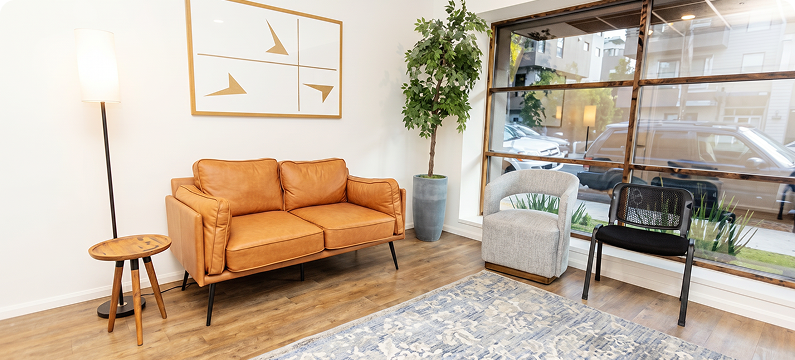
Worthy Wellness Center is Joint Commission accredited and certified by the California Department of Health Care Services. Our Carlsbad campus — one block from the ocean in Southern California — provides a private, calm, low-stimulus environment that is itself therapeutic for clients managing anxiety. The coastal setting, outdoor access, and intentionally unhurried pace of our program create the conditions in which the nervous system can begin to down-regulate before the formal clinical work even begins.
We offer anxiety treatment across the full continuum of outpatient care — from our Partial Hospitalization Program for clients who need the most intensive daily support, through our Intensive Outpatient Program and standard outpatient care as clients stabilize and reintegrate into daily life. For clients who need housing stability during treatment, our sober living options in Southern California are available across all levels of care.
We accept most major PPO insurance plans including Aetna, Anthem, Cigna, GEHA, Kaiser, Tricare, and Tufts, and we welcome cash pay clients and referrals from other treatment facilities throughout San Diego County. Our admissions team handles the verification process from start to finish so that accessing quality anxiety treatment does not become an obstacle to the care you need.
Trauma & Addiction Treatment in San Diego County That Works With Your Insurance
Exceptional care should be within reach, regardless of your financial situation. Worthy Wellness Center accepts most major insurance, cash pay, and referrals from other detox and residential facilities. Our admissions team handles the verification process from start to finish, so you can focus entirely on your recovery. If you’re unsure about your coverage, one call is all it takes.










Real People. Real Recovery. Hear What Clients Are Saying
We share these stories because sometimes the most powerful thing a person can hear when they’re scared and uncertain is that someone else has been exactly where they are, and found their way through.

Barry Knight

Worthy Wellness Center made an incredible difficult time much easier for our family. The team was always willing to answer questions. The substance abuse program really focuses on the whole person; mental, emotional, and physical recovery. It’s a safe, supportive environment that actually gives people the tools they moved need to move forward.

Jeannine Coulter
Worthy is optimally located, staffed and designed for an incredible early recovery experience. The techs, therapists and admissions coordinator are wonderful people who care deeply about quality client experiences. I had the opportunity to interview the CEO, Samantha, and I was incredibly moved by her personal story and her dedication to her clients. The curriculum includes classes for learning emotional regulation tools, building self esteem, cultivating professional skills and more. If you or a loved one is struggling with mental health or SUD, please don’t hesitate to reach out to the staff at Worthy.

Daniel Ramos
I had a really good experience at this treatment center. I came in struggling with PTSD, and the staff were kind, supportive, and always made me feel heard. They worked hard to meet my needs and helped connect me with outside services when needed. I never felt ignored or overlooked. The staff truly cared and went out of their way to help whenever I needed it. The small group setting made it easier to feel comfortable, and the weekend outings were one of the best parts. The food was good, and the environment felt safe and welcoming. This program helped me build a strong foundation and gave me the tools to handle everyday challenges. I’m very grateful for the care and support I received and feel more prepared to live life on life’s terms. difficult time much easier for our family. The team was always willing to answer questions. The substance abuse program really focuses on the whole person; mental, emotional, and physical recovery. It’s a safe, supportive environment that actually gives people the tools they moved need to move forward.

Kenneth Elliott
Worthy Wellness has done a terrific job of treating my clients for a variety of addictions. Holly is smart and amazing at helping with intake and transition. The staff is compassionate and insightful, and they make everyone feel welcome. Their dual diagnosis program is uniquely effective. The facilities are beautiful and well maintained. They coordinate and communicate well with the courts, which prevents problems on the legal side.
I recommend this center very highly, and send them any of my clients that need rehabilitation.

Sam Morehead
As a case manager placing clients in detox and residential treatment for mental health and substance use disorders, I’ve had consistently great experiences working with Worthy Wellness. Their team is responsive, compassionate, and professional, making the referral and intake process smooth during stressful transitions. They provide gender-specific treatment and offer a full continuum of care, including PHP, IOP, and virtual services. Their client-centered approach and genuine care make them a trusted partner, and I feel confident referring clients to Worthy Wellness.

Dylan Rieder
Worthy Wellness Center is the best! The entire staff is caring and only wants the best for their clients. Holly works very hard to make sure the intakes are taken care of and their CEO is the best, making sure her staff provides the best care for their clients. Their facility is really clean as well and I loved their housing. Looking forward to the other improvements they make to their company.

Kevin Hatch
worthy wellness has the greatest administration workers Holly was the best in my transitioning from residential treatment to my current PHP IOP status the staff here are so caring and helpful they even allowed my support animal and made special accommodations on my bigger bed as im a larger person and needed it … The facility is very clean and the housing is great. They are making improvements to better the treatment as there’s always room for improvement. I talked directly with the CEO about the concerns I had and she was very nice and understanding and willing to go there extra lengths for my comfort.

Desiree Ramos
I recently transition from infinity recovery detox to continue my treatment here at worthy and I love it here. The experience has been amazing the center offers a peaceful and supportive environment and it’s located right next to the beach…..making my recovery feel everlasting the combination of professional care and coastal setting provides perfect space for growth and healing ….thanks worthy

Christian Sims
This review is about the staff at Worthy. They are soo friendly and easy to talk to. The main office is in the best location and I felt welcome as soon as I walked through the door. I just met the owner recently and I’ve never met someone more invested and committed to providing the best possible service. They are really changing the community for the better and I 100% would recommend this place to anybody who is looking for treatment.

Benjamin Fucanan
I recently hosted a suicide prevention event in collaboration with the American Foundation for Suicide Prevention at Worthy Wellness, and I couldn’t be more impressed. As a mental health advocate and a behavioral health professional with over a decade of experience, I found the facility to be exceptional. The clinical staff is not only highly qualified but also deeply compassionate.
Worthy Wellness is truly dedicated to promoting mental health and well-being, and I am grateful for the opportunity to work with such an outstanding team. I highly recommend Worthy Wellness to anyone seeking support or resources in the mental health community.
How to Arrive at Worthy Wellness Center
Carlsbad, CA
2562 State Street Suite D Carlsbad, CA 92008
Explore our private and peaceful residential center one block from the ocean.
Beachside Addiction Treatment near San Diego, CA
Your story doesn’t start with addiction and nether does treatment at Worthy Wellness. Get connected to our
trauma-conscious, whole-person recovery programs today.