Morphine is a naturally derived opioid analgesic extracted from the opium poppy (Papaver somniferum) that binds to mu-opioid receptors in the central nervous system to block pain — and simultaneously activates the brain’s dopamine reward circuit in a way that makes physical dependence and addiction a serious clinical risk.
According to SAMHSA, approximately 6.1 million Americans aged 12 and older met the criteria for opioid use disorder in 2022, with prescription opioids like morphine serving as a common entry point. The CDC reports over 80,000 opioid-involved overdose deaths in 2021 alone.
Key Takeaways
- Morphine is a Schedule II full mu-opioid agonist; physical dependence can develop in as few as 3–5 days of continuous use.
- Morphine use disorder is diagnosed under DSM-5 using 11 criteria, rated mild, moderate, or severe.
- Overdose risk is highest in individuals who have lost tolerance — particularly after detox or incarceration.
- Naloxone reverses morphine overdose but often requires repeat dosing due to morphine’s longer half-life.
- Medication-assisted treatment (MAT) with buprenorphine, methadone, or naltrexone is the evidence-backed standard of care.
- Long-term morphine use causes measurable neuroplasticity changes that sustain cravings well beyond physical withdrawal.
- Recovery requires MAT combined with behavioral therapy and structured relapse prevention support.
What Is Morphine and How Does It Work?
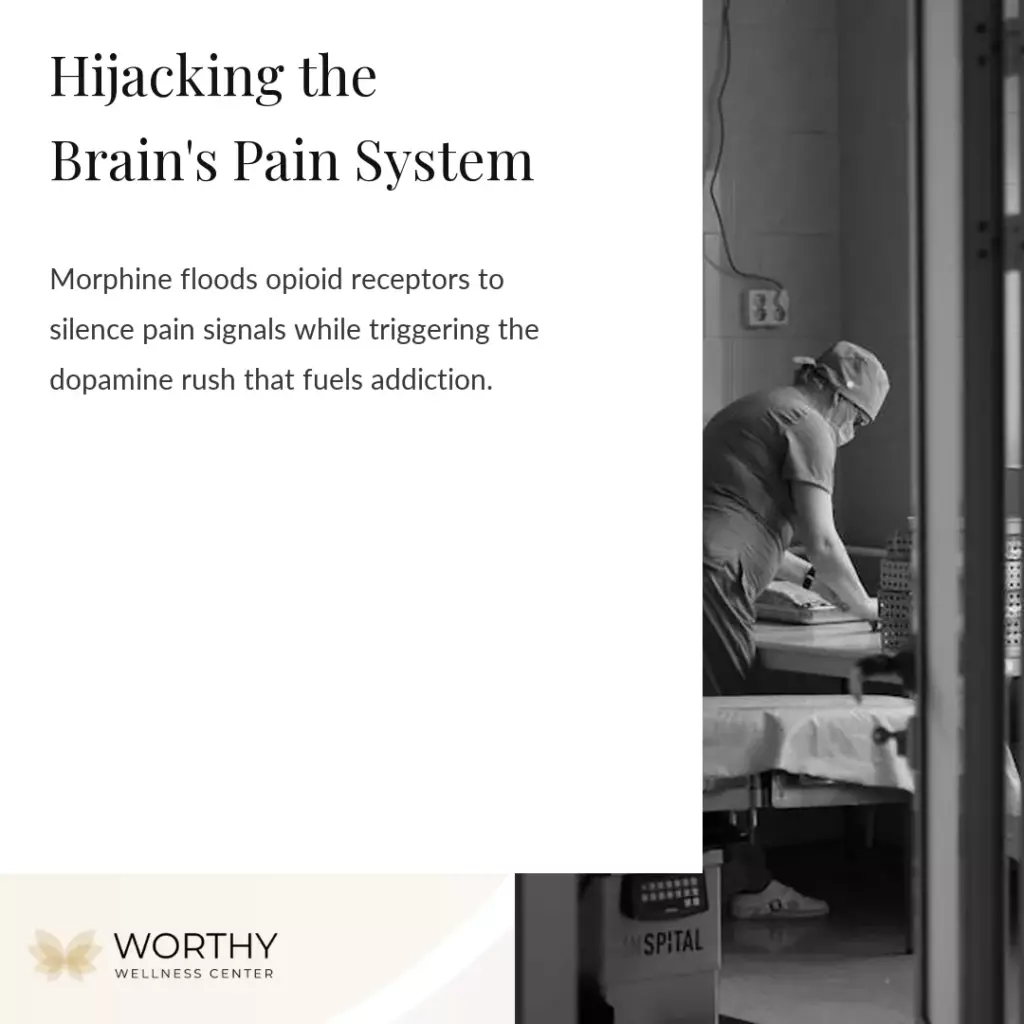
Morphine is a full mu-opioid receptor agonist that mimics the body’s natural endorphins, suppressing pain signals along the ascending nociceptive pathway while triggering dopamine release in the nucleus accumbens — the mechanism that underpins its high addiction potential.
What Are the Different Types of Morphine?
The different types of morphine are listed below:
| Formulation | Brand Examples | Route | Onset |
| Immediate-release | Roxanol, MSIR | Oral, sublingual | 30–60 min |
| Extended-release | MS Contin, Kadian | Oral | 1–4 hrs |
| Injectable | Morphine sulfate | IV, IM | Minutes |
Extended-release formulations carry elevated misuse risk when crushed or dissolved, converting a time-release dose into an immediate high-intensity bolus.
What Is Morphine Used For Medically?
Morphine is medically indicated for severe acute pain, cancer-related pain, palliative care, and pulmonary edema. Long-term prescribing for non-cancer chronic pain significantly elevates the risk of iatrogenic opioid use disorder.
How Is Morphine Classified and Regulated?
Morphine is classified as a Schedule II controlled substance under the DEA, meaning prescriptions require a written order, cannot be refilled, and are monitored through state Prescription Drug Monitoring Programs (PDMPs).
How Does Morphine Work in the Brain?
Morphine binds to mu-opioid receptors in the ventral tegmental area, triggering dopamine release into the nucleus accumbens. Repeated activation causes receptor downregulation and suppression of endogenous opioid production — meaning the brain loses its ability to regulate pain or mood without external morphine.
How Does Morphine Affect the Body and Mind?
Morphine produces a dose-dependent spectrum of CNS depression ranging from analgesia and anxiolysis to sedation and respiratory depression.
How Does Morphine Make People Feel?
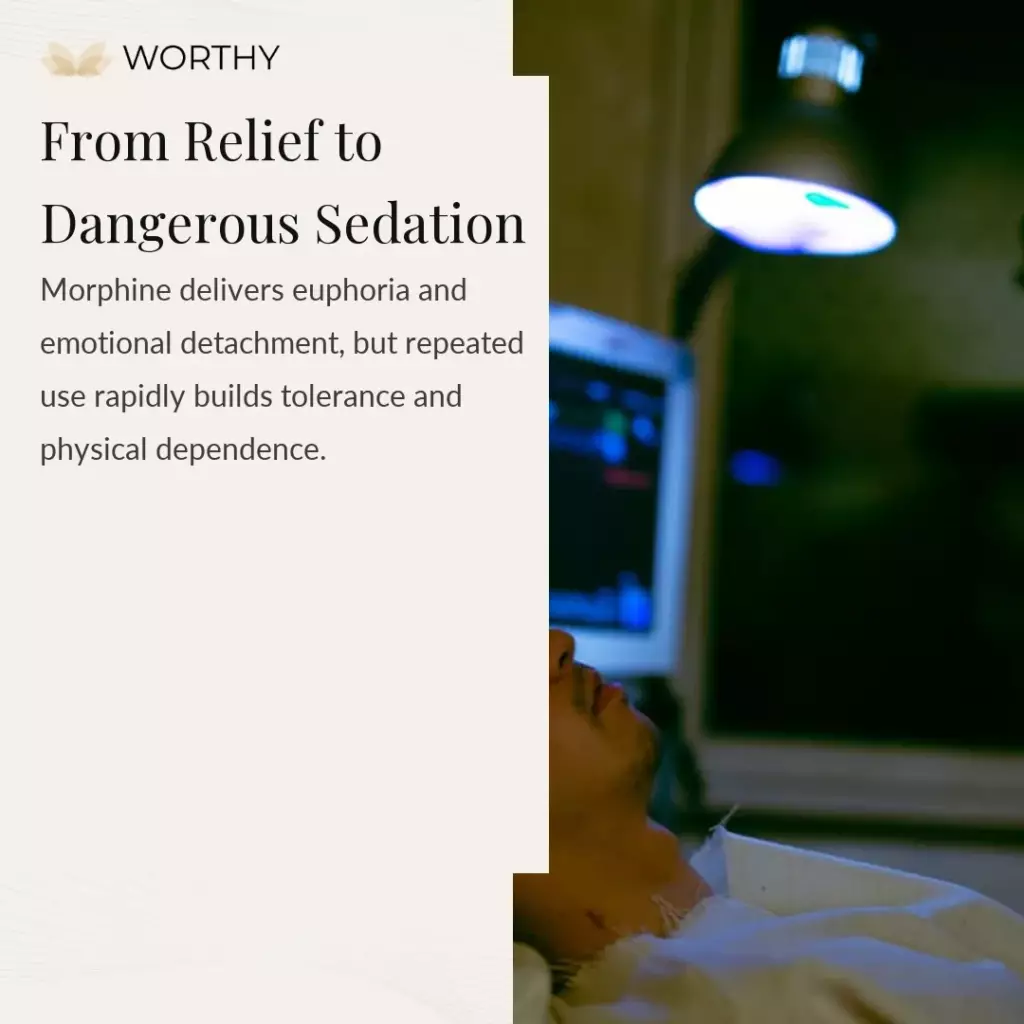
Morphine produces intense euphoria, warmth, sedation, and emotional detachment from pain. Medical patients in pain contexts often report relief without significant euphoria; recreational or high-dose use generates intense pleasure and “nodding” — the experiential reinforcement that drives compulsive use.
How Does Morphine Tolerance and Physical Dependence Develop?
Tolerance develops as mu-opioid receptors downregulate, requiring progressively higher doses to maintain the same effect. Physical dependence can develop within 3–5 days of continuous use. Tolerance (requiring more for the same effect), physical dependence (withdrawal on cessation), and addiction (compulsive use despite harm) are clinically distinct conditions that commonly co-occur.
What Are the Physical Signs and Symptoms of Morphine Use?
The physcial signs and symptoms of morphine use are highlighted below:
- Miosis: Pinpoint pupils regardless of lighting — a reliable clinical sign of opioid intoxication.
- Respiratory depression: Slowed, shallow breathing; the primary mechanism of overdose death.
- Constipation: GI opioid receptor binding reduces peristalsis; this effect does not diminish with tolerance.
- Sedation and pruritus: Drowsiness, slurred speech, facial itching from histamine release.
How Does Route of Administration Affect Morphine’s Effects?
Intravenous morphine produces CNS effects within minutes, generating a far more intense dopamine response than oral dosing. The faster the onset, the greater the reinforcing effect — compressing the addiction timeline for IV users relative to patients taking oral therapeutic doses.
What Are the Health Risks of Using Morphine?
The helath risk of using morphine are highlighted below:
Immediate Health Risks of Morphine Use
Morphine’s acute risks center on respiratory depression — amplified dramatically by concurrent benzodiazepine, alcohol, or gabapentinoid use. Additional risks include hypotension, aspiration pneumonia in sedated patients, and severe allergic reactions.
Long-Term Health Effects of Morphine Use
| System | Effect |
| Endocrine | Opioid-induced hypogonadism; reduced testosterone/estrogen; infertility |
| Immune | Suppressed natural killer cell activity; increased infection susceptibility |
| GI | Opioid-induced bowel dysfunction; risk of fecal impaction |
| Neurological | Opioid-induced hyperalgesia — paradoxical increased pain sensitivity |
How Does Morphine Affect Mental Health?
NIDA reports that individuals with substance use disorders are approximately twice as likely to have co-occurring mood or anxiety disorders. Morphine initially suppresses anxiety; chronic use disrupts natural mood regulation, deepening existing psychiatric conditions and generating new ones through neurochemical depletion.
What Are the Health Risks in Vulnerable Populations?
Pregnant women who use morphine risk neonatal opioid withdrawal syndrome (NOWS) in newborns. Elderly patients face elevated fall and over-sedation risk due to reduced renal clearance. Chronic pain patients can develop iatrogenic addiction under physician supervision, particularly at doses exceeding 90 morphine milligram equivalents (MME) per day.
What Is a Morphine Overdose?
A morphine overdose is a life-threatening emergency caused by excessive mu-opioid receptor activation that suppresses the brain’s respiratory drive, leading to hypoxia and death without intervention.
What Are the Signs and Symptoms of a Morphine Overdose?
The opioid overdose triad includes:
(1) unresponsiveness — cannot be roused by voice or sternal rub;
(2) respiratory depression — slow, shallow, or absent breathing; and
(3) miosis — pinpoint pupils in any light. Cyanosis of the lips or fingernails signals active oxygen deprivation.
How Is a Morphine Overdose Treated?
Naloxone (Narcan) reverses morphine overdose within 2–5 minutes by competitively displacing morphine from mu-opioid receptors. Because morphine’s half-life (2–4 hours) can outlast naloxone’s duration (30–90 minutes), repeat dosing is frequently required. Emergency transport is mandatory regardless of apparent recovery. Naloxone is available without prescription in most U.S. states.
What Factors Increase Morphine Overdose Risk?
The factors that increase morphine overdose risks are listed below:
- Tolerance loss: Post-detox or post-incarceration return to a previously tolerated dose is frequently fatal.
- Polysubstance use: Benzodiazepines, alcohol, and muscle relaxants multiply respiratory depression risk non-linearly.
- Fentanyl contamination: Illicit morphine supplies are increasingly adulterated, raising unpredictable overdose potency.
Is Morphine Addictive?
Morphine is highly addictive due to its direct, potent activation of the brain’s dopamine reward pathway. NIDA classifies morphine as having high addiction potential among opioid compounds.
How Quickly Can Someone Become Addicted to Morphine?
Physical dependence can develop within days; psychological addiction timelines vary by dose, route, genetics, and psychiatric comorbidity. IV use generates intense dopaminergic reinforcement, compressing the addiction timeline dramatically relative to oral therapeutic dosing.
Can You Become Addicted to Prescribed Morphine?
Yes — iatrogenic morphine addiction is a documented clinical outcome, not a rare edge case. Risk increases substantially with doses exceeding 90 MME/day, treatment durations beyond 90 days, and prescribing without addiction risk screening or PDMP review.
What Are the Risk Factors for Developing Morphine Addiction?
The risk factors for developing morphine addiction are listed below
- Personal or family history of substance use disorder
- Untreated depression, anxiety, or PTSD
- History of trauma or adverse childhood experiences (ACEs)
- Early initiation of opioid use during adolescence
- High-dose or prolonged-duration morphine prescriptions
What Is Morphine Addiction (Morphine Use Disorder)?
Morphine use disorder is a chronic relapsing brain disease characterized by compulsive morphine seeking and use despite physical, psychological, and social harm; it is formally classified under Opioid Use Disorder in the DSM-5.
What Are the DSM-5 Diagnostic Criteria for Morphine Use Disorder?
Opioid use disorder requires 2 or more of 11 criteria within a 12-month period: using more than intended, failed attempts to cut down, craving, neglect of obligations, continued use despite harm, tolerance, and withdrawal are among the most diagnostically weighted. Severity is rated mild (2–3 criteria), moderate (4–5), or severe (6+).
How Does Morphine Addiction Change the Brain?
Chronic morphine use reduces prefrontal cortex (PFC) activity — impairing impulse control — while sensitizing the amygdala to drug cues and stress. Mu-opioid receptor density decreases throughout the reward circuit. These neuroplasticity changes persist for months to years after cessation, explaining protracted cravings and elevated relapse risk long past physical withdrawal.
What Are the Symptoms of Morphine Addiction?
The most common symptoms of morphine addiction are explained below:
Physical Symptoms of Morphine Addiction
- Unintended weight loss
- Hormonal disruption (low libido, menstrual irregularity)
- Chronic constipation
- Sleep disorder
- Track marks in IV users
- Abscesses
- Collapsed veins
Behavioral Warning Signs of Morphine Addiction
- Doctor shopping: Visiting multiple providers to obtain overlapping prescriptions.
- Prescription fraud: Forging or altering prescriptions to sustain morphine access.
- Social withdrawal: Abandoning family obligations, employment, and relationships.
- Financial deterioration: Spending beyond sustainable means to obtain morphine.
Psychological Symptoms of Morphine Addiction
- Preoccupation with obtaining and using morphine
- Dysphoria between doses
- Emotional blunting
- Anhedonia when sober
- Cognitive fog characterized by impaired memory
- Reduced executive function
What Are the Symptoms of Morphine Withdrawal?
The common symptoms of morphine withdrawal are:
| Phase | Timeline | Key Symptoms |
| Early | 6–12 hrs post last dose | Anxiety, yawning, lacrimation, rhinorrhea |
| Peak | 36–72 hrs | Insomnia, muscle cramps, vomiting, diarrhea, hypertension |
| Resolution | 5–10 days | Gradual symptom reduction |
| PAWS | Weeks to months | Dysphoria, cravings, insomnia, anhedonia |
Post-acute withdrawal syndrome (PAWS) is a primary driver of relapse and requires sustained clinical management beyond the acute detox window.
What Causes Morphine Addiction?
Morphine addiction follows a biopsychosocial model in which no single factor is sufficient alone. Genetic factors account for 40–60% of addiction vulnerability, per NIDA; OPRM1 gene variants affect mu-opioid receptor sensitivity while CYP450 variants influence morphine metabolism speed.
Psychological factors — untreated trauma, depression, and anxiety — fuel self-medication pathways. Social stressors including peer use, housing instability, and lack of support sustain exposure and limit access to recovery resources.
How Is Morphine Addiction Diagnosed?
Morphine addiction is diagnosed through DSM-5 clinical evaluation, urine drug toxicology, PDMP review, and validated screening instruments including the Opioid Risk Tool (ORT) and DAST-10. Co-occurring psychiatric conditions and medical complications are assessed simultaneously to guide appropriate level-of-care placement per ASAM criteria.
What Are the Treatment Options for Morphine Addiction?
The treatment options for morphine addiction are highlighted below:
What Medications Are Used to Treat Morphine Addiction (MAT)?
Per SAMHSA, MAT reduces opioid use, overdose mortality, criminal activity, and infectious disease transmission.
| Medication | Class | Key Feature |
| Methadone | Full agonist | Long half-life; daily supervised clinic dosing |
| Buprenorphine/naloxone (Suboxone) | Partial agonist | Ceiling effect limits overdose risk; office-based prescribing |
| Naltrexone (Vivitrol) | Antagonist | Monthly injection; blocks euphoria if relapse occurs |
What Behavioral Therapies Are Used to Treat Morphine Addiction?
CBT restructures maladaptive thought-use cycles. Contingency Management provides tangible reinforcement for confirmed abstinence. Motivational Interviewing resolves ambivalence about change. EMDR targets trauma in dual-diagnosis cases, addressing the psychological roots of self-medication.
What Treatment Settings Are Available for Morphine Addiction?
Treatment setting is matched to clinical severity per ASAM criteria: medical detox, residential , PHP, IOP, and standard outpatient/MOUD clinic. Medical detox alone is not treatment; it is the clinical entry point to a full continuum of care.
How Do You Maintain Recovery and Prevent Relapse?
Long-term MAT continuation significantly reduces relapse and overdose mortality; premature discontinuation is a documented overdose risk factor. PAWS management, peer recovery support, and CBT-based relapse trigger mapping form the backbone of sustained, long-term recovery.
Morphine addiction is a chronic, treatable brain disease — and early identification combined with medication-assisted treatment and behavioral therapy offers the clearest path to lasting recovery.
If you or a loved one is struggling with morphine addiction, Worthy Wellness Center provides comprehensive opioid use disorder treatment including medically supervised detox, MAT, and individualized therapy programs. Reach out to take the first step.
Sources