Alcohol is a CNS depressant and the most widely consumed psychoactive substance in the United States — and its social and legal normalization masks a public health crisis in which nearly 29 million Americans meet the clinical criteria for alcohol use disorder.
According to the 2023 National Survey on Drug Use and Health (NSDUH), an estimated 28.9 million Americans aged 12 and older had an alcohol use disorder (AUD) in the past year. The CDC reports approximately 178,000 alcohol-attributable deaths per year in the United States — a 29% increase from 2016–2017 — making excessive alcohol use one of the leading preventable causes of death in the country.
Key Takeaways
- Alcohol use disorder affects approximately 28.9 million Americans; only about 7.9% received treatment in 2023.
- Alcohol acts on GABA and glutamate systems to produce CNS depression; chronic use causes neuroadaptation that makes withdrawal medically dangerous and potentially fatal.
- Alcohol withdrawal — unlike opioid or stimulant withdrawal — can cause seizures and delirium tremens (DTs), a life-threatening emergency requiring medical supervision.
- DSM-5 diagnoses AUD across 11 criteria, rated mild, moderate, or severe; it replaces the older “alcohol abuse” and “alcohol dependence” categories.
- Three FDA-approved medications exist for AUD: naltrexone, acamprosate, and disulfiram — distinct from opioid and stimulant treatment pharmacology.
- Long-term heavy alcohol use is causally linked to liver disease, cardiovascular disease, seven types of cancer, and irreversible brain damage.
- The treatment gap for AUD is among the largest of any substance use disorder — most people with AUD never receive clinical care.
What Is Alcohol and How Does It Work?
Alcohol (ethanol) is a short-chain aliphatic alcohol produced by the fermentation of sugars that acts as a CNS depressant by enhancing GABA (inhibitory) neurotransmission and inhibiting NMDA glutamate (excitatory) receptors — producing sedation, anxiolysis, cognitive impairment, and, at sufficient doses, unconsciousness and death. Per NIAAA, alcohol is the most common substance used among people aged 12 and older in the United States.

What Are the Different Types of Alcohol?
All beverage alcohol contains ethanol; the distinction between types relates to ethanol concentration and delivery format:
| Type | Standard Drink | Ethanol Content | Common Volume |
| Beer | 1 regular beer | ~5% ABV | 12 fl oz |
| Wine | 1 glass | ~12% ABV | 5 fl oz |
| Distilled spirits | 1 shot | ~40% ABV | 1.5 fl oz |
A standard drink contains approximately 14 grams of pure ethanol, per NIAAA. This standardization matters clinically because most people significantly underestimate the alcohol content of what they actually consume.
What Is the Difference Between Alcohol Use, Binge Drinking, and Heavy Drinking?
These three categories define the spectrum from low-risk to high-risk alcohol consumption:
- Alcohol use: Any consumption of alcoholic beverages; not inherently harmful at low-risk levels.
- Binge drinking: Defined by NIAAA as a pattern that brings blood alcohol concentration to 0.08 g/dL — typically 4 drinks for women and 5 drinks for men within approximately 2 hours.
- Heavy drinking: More than 4 drinks on any day or more than 14 drinks per week for men; more than 3 drinks on any day or more than 7 drinks per week for women.
Binge drinking is the most common form of excessive alcohol use and is a primary driver of acute harms including alcohol poisoning, injury, and DUI fatalities.
How Is Alcohol Classified and Regulated?
Alcohol is not scheduled under the Controlled Substances Act — it is regulated under federal and state alcohol beverage control law rather than DEA scheduling. This legal distinction is a primary driver of the treatment gap: social normalization reduces perceived need for clinical care even in individuals who fully meet AUD criteria.
How Does Alcohol Work in the Brain?
Alcohol’s CNS depressant effects are mediated by two primary mechanisms: potentiation of GABA-A receptor activity (increasing inhibitory signaling) and blockade of NMDA glutamate receptors (reducing excitatory signaling).
Simultaneously, alcohol triggers dopamine release in the nucleus accumbens — producing the reinforcing euphoric and anxiolytic effects that drive repeated use. With chronic heavy use, the brain adapts by downregulating GABA receptors and upregulating NMDA receptors to restore equilibrium; this neuroadaptation is what makes alcohol withdrawal dangerous — removing alcohol destabilizes these systems, producing excitatory rebound that can escalate to seizures.
How Does Alcohol Affect the Body and Mind?
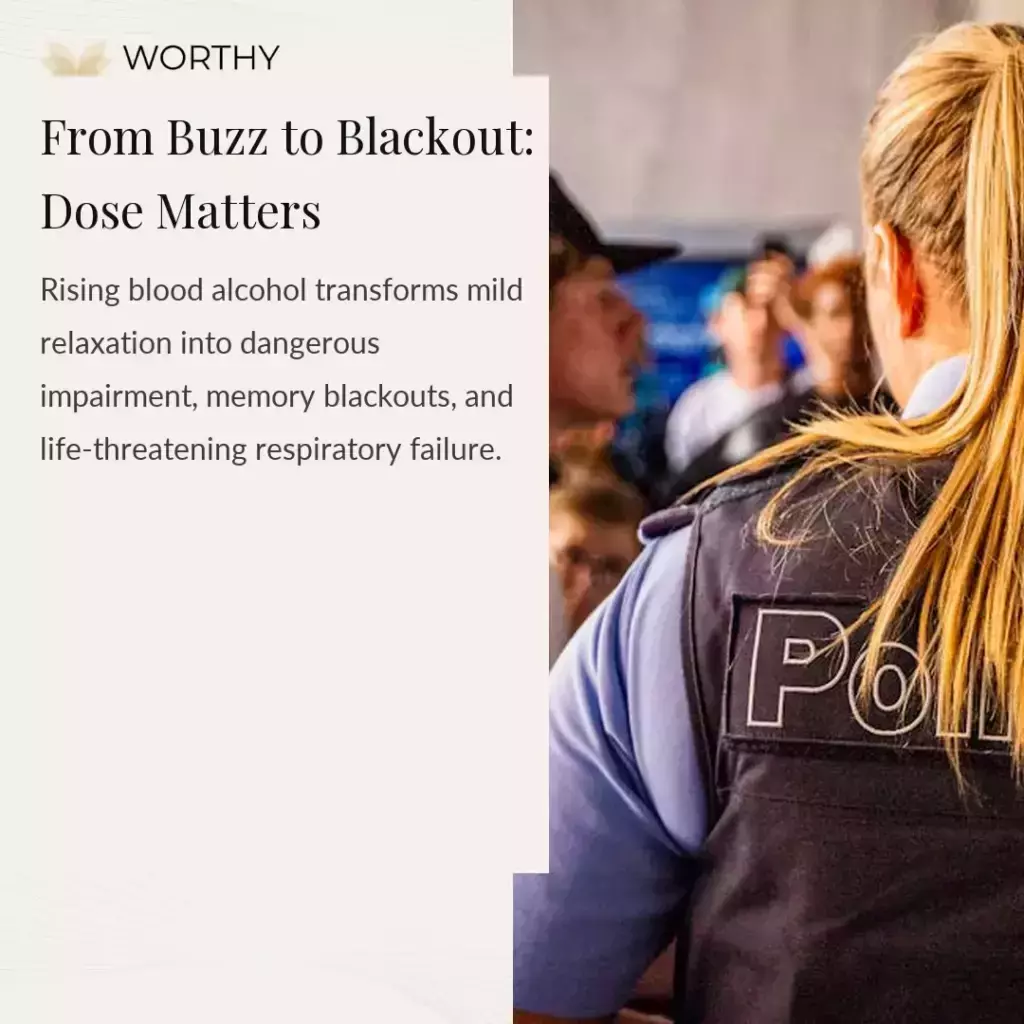
Alcohol produces dose-dependent CNS effects that progress from mild disinhibition at low blood alcohol concentrations (BAC) to respiratory depression and death at very high BAC levels.
How Does Alcohol Make People Feel?
At low BAC (0.02–0.05 g/dL): relaxation, lowered inhibitions, and mild euphoria. At moderate BAC (0.06–0.15 g/dL): impaired judgment, coordination deficits, and emotional dysregulation. At high BAC (>0.15 g/dL): severe impairment, vomiting, and blackouts — alcohol-induced anterograde amnesia in which memory formation is blocked despite the person remaining conscious.
How Does Alcohol Tolerance and Physical Dependence Develop?
Tolerance develops through metabolic adaptation (the liver upregulates alcohol-metabolizing enzymes) and neuroadaptive tolerance (GABA and glutamate receptor desensitization). Physical dependence — alcohol’s most clinically significant feature — develops when neuroadaptation becomes entrenched, making normal CNS function impossible without alcohol. Dependence can develop within weeks to months of regular heavy use.
What Are the Physical Signs and Symptoms of Alcohol Use?
The physical signs and symptoms of alcohol use are listed below:
- Alcohol odor: Ethanol and acetaldehyde produce a recognizable breath odor.
- Flushing and diaphoresis: Vasodilation causes visible facial flushing.
- Slurred speech and ataxia: Cerebellar impairment produces unsteady gait and coordination deficits.
- Nystagmus: Involuntary eye movement; a standard clinical and law enforcement intoxication indicator.
- Behavioral disinhibition: Lowered inhibition, risk-taking, and emotional instability.
What Are the Health Risks of Using Alcohol?
The health risks of using alcohol are explained below:
Immediate Health Risks of Alcohol Use
Acute risks include impaired driving (alcohol involved in 30% of all U.S. traffic fatalities in 2023, per NIAAA), injury from falls and violence, alcohol poisoning, and aspiration in unconscious individuals. Risk compounds significantly when alcohol is combined with benzodiazepines, opioids, or sleep medications.
Long-Term Health Effects of Alcohol Use
| System | Effect |
| Liver | Alcoholic fatty liver → alcoholic hepatitis → cirrhosis → liver failure |
| Cardiovascular | Cardiomyopathy, arrhythmia, hypertension, stroke |
| Oncological | Causally linked to 7 cancer types: mouth, throat, esophagus, liver, colon, rectum, breast |
| Neurological | Wernicke-Korsakoff syndrome (thiamine deficiency-induced brain damage); alcoholic peripheral neuropathy |
| Gastrointestinal | Pancreatitis; gastritis; GI bleeding |
| Immune | Suppressed immunity; elevated pneumonia and infection risk |
Alcohol is the third leading preventable cause of cancer in the United States, following tobacco and obesity — a fact that remains significantly underrecognized by the general public.
How Does Alcohol Affect Mental Health?
NIAAA reports that AUD frequently co-occurs with depression, anxiety, PTSD, and bipolar disorder. Alcohol initially suppresses anxiety by potentiating GABA; chronic use depletes serotonin and dopamine reserves, progressively worsening underlying psychiatric conditions. The relationship is bidirectional: psychiatric disorders elevate AUD risk, and AUD accelerates psychiatric deterioration.
What Are the Health Risks in Vulnerable Populations?
Fetal alcohol spectrum disorders (FASD) — caused by prenatal alcohol exposure — represent the leading preventable cause of intellectual disability in the United States; no safe level of alcohol during pregnancy exists.
Adolescents who begin drinking before age 15 are four times more likely to develop AUD than those who wait until 21, per NIAAA. Older adults face amplified toxicity risk due to reduced metabolism and polypharmacy interactions.
What Is Alcohol Poisoning (Alcohol Overdose)?
Alcohol poisoning — an acute alcohol overdose — occurs when blood alcohol concentration reaches levels that suppress the brainstem’s respiratory control centers, producing apnea, cardiovascular collapse, and death.
What Is the Difference Between Alcohol Poisoning and an Alcohol Overdose?
Alcohol poisoning and acute alcohol overdose are the same clinical event, differing only in terminology. Alcohol poisoning is the lay term; acute alcohol intoxication with CNS and respiratory depression is the clinical description.
Both refer to a life-threatening BAC elevation typically caused by rapid, high-volume consumption. Unlike opioid overdose, no pharmacological reversal agent equivalent to naloxone exists for alcohol — treatment is entirely supportive.
What Are the Signs and Symptoms of Alcohol Poisoning?
The signs and symptoms of alcohol poisoning are listed below:
- Unresponsiveness or stupor: Cannot be roused by voice or physical stimulus.
- Vomiting while unconscious: Aspiration risk is high; a leading cause of alcohol poisoning death.
- Slow or irregular breathing: Fewer than 8 breaths per minute, or 10-second gaps between breaths.
- Pale, bluish, or cold skin: Signs of peripheral circulatory compromise.
- Seizures: Hypoglycemia secondary to alcohol metabolism can trigger seizure activity.
How Is Alcohol Poisoning Treated?
Alcohol poisoning is treated with supportive emergency care: airway protection, IV fluids, glucose for hypoglycemia, thiamine supplementation, and cardiac monitoring. There is no reversal agent — call 911 immediately. Most U.S. states have medical amnesty laws that protect people who call for help during a poisoning.
What Factors Increase Alcohol Poisoning Risk?
The factors that increase alcohol poisoning risk are given below:
- Rapid consumption: Drinking large amounts in short periods (binge drinking, drinking games, shots) overwhelms metabolic capacity.
- Empty stomach: Food in the stomach slows ethanol absorption; drinking without eating accelerates BAC rise.
- Tolerance masking danger: Highly tolerant individuals may not appear impaired at BAC levels that cause respiratory depression in non-tolerant individuals.
- Polysubstance use: CNS depressants compound alcohol’s respiratory depression risk non-linearly.
Is Alcohol Addictive?
Yes. Alcohol is highly addictive through both psychological reinforcement (dopamine reward pathway activation) and physical dependence (GABA/glutamate neuroadaptation). NIAAA estimates that approximately 1 in 10 Americans aged 12 and older has AUD — making it by far the most prevalent substance use disorder in the United States.
How Quickly Can Someone Become Addicted to Alcohol?
Physical dependence can develop within weeks to months of daily heavy use, though the clinical addiction timeline varies widely. Key accelerants include drinking to cope with stress or anxiety, drinking daily rather than socially, escalating quantity over time, and early initiation in adolescence.
Gradual onset — with alcohol’s social normalization masking escalating use — means many individuals do not recognize addiction has developed until it is severe.
What Are the Risk Factors for Developing Alcohol Use Disorder?
The risk factors for developing alcohol use disorder are listed below:
- Family history of AUD (genetic heritability ~50–60%, per NIAAA)
- Early initiation of drinking before age 15
- Co-occurring depression, anxiety, PTSD, or bipolar disorder
- History of trauma or adverse childhood experiences (ACEs)
- Social environment where heavy drinking is normalized
What Is Alcohol Addiction (Alcohol Use Disorder)?
Alcohol use disorder is a chronic relapsing brain disease characterized by compulsive alcohol seeking and use, loss of control over drinking, and continued use despite significant harm; it is formally classified as Alcohol Use Disorder in the DSM-5, replacing the prior categories of “alcohol abuse” and “alcohol dependence.”
What Are the DSM-5 Diagnostic Criteria for Alcohol Use Disorder?
AUD requires 2 or more of 11 criteria within 12 months: drinking more or longer than intended; failed attempts to cut down; excessive time spent drinking or recovering; craving; neglect of obligations; continued use despite social or physical harm; tolerance; and withdrawal. Severity: mild (2–3), moderate (4–5), severe (6+).
How Does Alcohol Addiction Change the Brain?
Chronic heavy drinking reduces prefrontal cortex and hippocampal gray matter volume, impairs dopamine receptor density, and disrupts white matter integrity — driving the impulse control failures and decision-making deficits that sustain compulsive drinking.
Wernicke-Korsakoff syndrome, caused by alcohol-related thiamine deficiency, produces irreversible thalamic and hypothalamic damage resulting in severe memory loss and confabulation.
What Are the Symptoms of Alcohol Addiction?
Physical Symptoms of Alcohol Use Disorder
Morning drinking or drinking to prevent withdrawal symptoms; unexplained weight changes; jaundice or abdominal distension (signs of liver disease); peripheral neuropathy; frequent blackouts; hand tremor at rest; and declining physical appearance and hygiene.
Behavioral Warning Signs of Alcohol Use Disorder
- Drinking in secret: Hiding bottles, drinking before events, or lying about consumption amounts.
- Inability to stop at intended limits: Consistently drinking more than planned.
- Drinking to function: Needing alcohol to start the day or manage stress.
- Neglect of obligations: Missed work, neglected family responsibilities, abandoned social activities.
- Continued drinking despite consequences: DUI arrests, relationship breakdowns, health deterioration.
Psychological Symptoms of Alcohol Use Disorder
Preoccupation with alcohol availability, irritability and anxiety when not drinking, emotional dysregulation, depression and anhedonia during sober periods, cognitive impairment (memory gaps, poor concentration), and denial — a defining feature of AUD given the social normalization of drinking.
What Are the Symptoms of Alcohol Withdrawal?
Alcohol withdrawal is clinically unique among substance withdrawals because it can be fatal:
| Phase | Timeline | Key Symptoms |
| Mild withdrawal | 6–24 hrs after last drink | Tremor, anxiety, sweating, insomnia, nausea |
| Moderate withdrawal | 24–48 hrs | Elevated heart rate and BP, hallucinations (visual/auditory/tactile) |
| Severe withdrawal / DTs | 48–96 hrs | Delirium tremens — global confusion, severe agitation, fever, seizures |
| PAWS | Weeks to months | Dysphoria, anxiety, insomnia, cravings, cognitive fog |
How Does Alcohol Withdrawal Become Life-Threatening?
Delirium tremens (DTs) — occurring in approximately 3–5% of people undergoing alcohol withdrawal — is a medical emergency with an untreated mortality rate of 5–15%. DTs result from the excitatory rebound when GABA receptor downregulation and NMDA upregulation are suddenly exposed by alcohol removal.
Symptoms include severe autonomic instability, hyperthermia, extreme agitation, and generalized seizures. Medical supervision during alcohol detox is not optional for moderate to severe AUD — unsupervised “cold turkey” cessation is a documented cause of death. First-line treatment uses benzodiazepines (diazepam or chlordiazepoxide) to manage GABA-mediated excitatory rebound.
What Causes Alcohol Use Disorder?
Alcohol use disorder follows the biopsychosocial model. Genetic heritability is estimated at 50–60%, per NIAAA, with variants in ADH and ALDH genes and GABA-A receptor subunits affecting metabolism and subjective alcohol response.
Psychological drivers include untreated depression, anxiety, and PTSD — conditions that alcohol temporarily relieves while worsening over time. Social and cultural drivers — advertising, occupational drinking norms, and the normalization of alcohol as a stress-management tool — create structural access that sustains use beyond individual intent.
How Is Alcohol Use Disorder Diagnosed?
AUD is diagnosed through DSM-5 clinical evaluation, validated screening tools (AUDIT, CAGE, AUDIT-C), physical examination for signs of organ damage, and laboratory markers including LFTs, GGT, and MCV.
Withdrawal risk is assessed using the Clinical Institute Withdrawal Assessment for Alcohol (CIWA-Ar) scale, which guides the urgency and setting of medical detox per ASAM Level of Care criteria.
What Are the Treatment Options for Alcohol Use Disorder?
The treatment options are highlighted below:
What Are the FDA-Approved Medications for Alcohol Use Disorder?
Three medications are FDA-approved specifically for AUD, per NIAAA:
| Medication | Brand Name | Mechanism | Best For |
| Naltrexone | Revia (oral), Vivitrol (monthly injection) | Opioid receptor antagonist; blocks alcohol’s euphoric reinforcement | Reducing heavy drinking; preventing relapse |
| Acamprosate | Campral | Modulates GABA/glutamate balance; reduces post-acute craving | Maintaining abstinence in patients already detoxed |
| Disulfiram | Antabuse | Blocks aldehyde dehydrogenase; causes aversive reaction to alcohol | Deterrence in highly motivated, supervised patients |
Naltrexone and acamprosate are the preferred first-line options per clinical guidelines; disulfiram is a second-line option due to compliance and safety considerations.
What Behavioral Therapies Are Used to Treat Alcohol Use Disorder?
CBT restructures thought-use cycles and builds coping skills. Motivational Interviewing (MI) is particularly effective for AUD given the high prevalence of ambivalence and denial. 12-Step Facilitation connects individuals to Alcoholics Anonymous (AA) — peer recovery support with robust longitudinal evidence. Behavioral Couples Therapy addresses the relational drivers of drinking that individual therapy alone does not reach.
What Treatment Settings Are Available for Alcohol Use Disorder?
Settings are matched to severity per ASAM criteria: medical detox, residential, PHP, IOP, standard outpatient with MAT. Medical detox is not optional for moderate-severe AUD — unsupervised withdrawal in high-risk individuals is a documented cause of death.
How Do You Maintain Recovery and Prevent Relapse from Alcohol Use Disorder?
Long-term recovery requires continued medication (naltrexone or acamprosate for 12+ months substantially reduces relapse), peer recovery support through AA or SMART Recovery, and treatment of co-occurring psychiatric conditions.
Post-acute withdrawal syndrome (PAWS) — persistent dysphoria, anxiety, and cognitive fog — requires ongoing clinical monitoring as a primary relapse risk factor for months after detox.
Alcohol use disorder is a chronic, treatable brain disease — and the combination of FDA-approved pharmacotherapy, behavioral intervention, and peer recovery support delivers clinically meaningful outcomes, even for individuals with severe or long-standing AUD.
If you or a loved one is struggling with alcohol use disorder, Worthy Wellness Centeroffers comprehensive treatment, including medically supervised detox, evidence-based therapy, and structured recovery programming.
Sources
- NIAAA — Alcohol Facts and Statistics
- SAMHSA — 2023 National Survey on Drug Use and Health
- CDC — Deaths from Excessive Alcohol Use
- NIAAA — Alcohol-Related Emergencies and Deaths in the United States
- NIAAA — Alcohol Treatment in the United States
- SAMHSA — Find Treatment
- American Psychiatric Association — DSM-5
- ASAM — Clinical Practice Guidelines