Adderall is a central nervous system stimulant composed of mixed amphetamine salts that the FDA approves for treating attention-deficit/hyperactivity disorder (ADHD) and narcolepsy — and when misused, it carries a clinically recognized risk for dependence, addiction, and overdose. According to SAMHSA’s 2021 National Survey on Drug Use and Health, approximately 3.7 million people aged 12 or older misused prescription stimulants in the past year, with Adderall accounting for the largest share of that misuse.
Adderall misuse has risen alongside legitimate prescribing rates, particularly among young adults. A 2018 study published in JAMA Psychiatry found that nonmedical use of prescription stimulants increased significantly in adults aged 18–25, independent of ADHD diagnosis rates.
Key Takeaways
- Adderall contains mixed amphetamine salts (dextroamphetamine and levoamphetamine) and is a DEA Schedule II controlled substance.
- Adderall increases dopamine and norepinephrine activity in the brain, producing focus, wakefulness, and — at high doses — euphoria.
- Misuse, tolerance, and physical dependence can develop even in people with a valid prescription.
- Adderall addiction is formally diagnosed as Stimulant Use Disorder under DSM-5 criteria.
- Behavioral therapies, structured treatment settings (IOP, PHP, residential), and relapse prevention programs are the primary treatment options.
- Withdrawal symptoms typically resolve within 1–3 weeks but require medical supervision.
What Is Adderall and How Does It Work?
Adderall is a prescription stimulant that increases the release and blocks the reuptake of dopamine and norepinephrine in the brain, producing heightened alertness, focus, and motivation. It is manufactured as immediate-release (IR) and extended-release (XR) formulations, both containing a 3:1 ratio of dextroamphetamine to levoamphetamine salts.

What Are the Different Types of Adderall?
The different types of adderall are highlighted in the table below:
| Type | Duration of Action | Formulation |
| Adderall IR (immediate-release) | 4–6 hours | Tablet |
| Adderall XR (extended-release) | 10–12 hours | Capsule (bead-release) |
| Generic amphetamine salts | Varies by manufacturer | Tablet or capsule |
What Is Adderall Used For Medically?
Adderall treats two FDA-approved conditions: ADHD and narcolepsy. In ADHD, Adderall reduces hyperactivity and impulsivity by normalizing dopamine signaling in the prefrontal cortex, the brain region responsible for executive function and impulse control. In narcolepsy, Adderall promotes sustained wakefulness by elevating norepinephrine levels in the brainstem arousal circuits.
How Is Adderall Classified and Regulated?
Adderall is classified as a Schedule II controlled substance by the DEA, the same category as cocaine and methamphetamine — meaning it carries a high potential for abuse and dependence. Prescribers must issue a new written prescription each month; refills are not legally permitted under federal law.
How Does Adderall Affect the Body and Mind?
Adderall affects the body and mind by flooding the brain’s reward circuitry with dopamine, specifically targeting the nucleus accumbens and prefrontal cortex. Effects vary significantly based on dose, route of administration, and whether the user has ADHD.
How Does Adderall Make People Feel?
Adderall produces calm focus, reduced impulsivity, and improved working memory at therapeutic doses in people with ADHD. At higher doses or in people without ADHD, it produces:
- Euphoria: Intense pleasure from rapid dopamine surges in the reward pathway.
- Heightened confidence: Elevated norepinephrine increases motivation and assertiveness.
- Reduced appetite: Stimulant activity suppresses hunger signaling in the hypothalamus.
- Increased sociability: Some users report talkativeness and emotional openness.
Can Adderall Make You Tired?
Yes. Adderall can cause fatigue, particularly during the “crash” as the drug wears off. As dopamine and norepinephrine levels fall below baseline after the dose clears, users experience rebound exhaustion, low mood, and mental fog. This crash is more pronounced with IR formulations and higher doses.
Does Adderall Make You High?
Yes. Adderall can make you high. It produces euphoria when taken in doses above the therapeutic range, especially when crushed and snorted or injected — methods that deliver the drug to the brain rapidly and produce a high similar to methamphetamine. According to the Journal of Substance Abuse Treatment, the intensity of Adderall-induced euphoria is a primary driver of recreational misuse and addiction development.
How Does Adderall Tolerance and Physical Dependence Develop?
Repeated Adderall exposure causes the brain to downregulate dopamine receptors — reducing the number and sensitivity of receptors to compensate for the flood of dopamine the drug produces. This neuroadaptation is the mechanism behind:
- Tolerance: The same dose produces diminishing effects over time, driving users to escalate doses.
- Physical dependence: The brain restructures itself around Adderall’s presence; removing the drug produces withdrawal symptoms.
Tolerance can begin developing within weeks of daily use, even at therapeutic doses.
What Are the Physical Signs and Symptoms of Adderall Use?
The physical signs and symptoms of adderall use are highlighted in the table below:
| Acute Effects | Short-Term Signs |
| Decreased appetite | Weight loss |
| Elevated heart rate | Cardiovascular strain |
| Dry mouth | Teeth grinding (bruxism) |
| Dilated pupils | Insomnia |
| Increased body temperature | Excessive sweating |
Does Adderall Keep You Awake?
Yes. Adderall promotes wakefulness by activating norepinephrine receptors in the brain’s arousal system (the locus coeruleus). Even at therapeutic doses, Adderall taken too late in the day disrupts sleep onset and reduces total sleep time — a primary reason prescribers direct patients to take it before noon.
What Are the Health Risks of Using Adderall?
The health risks of using Adderall are explained below:
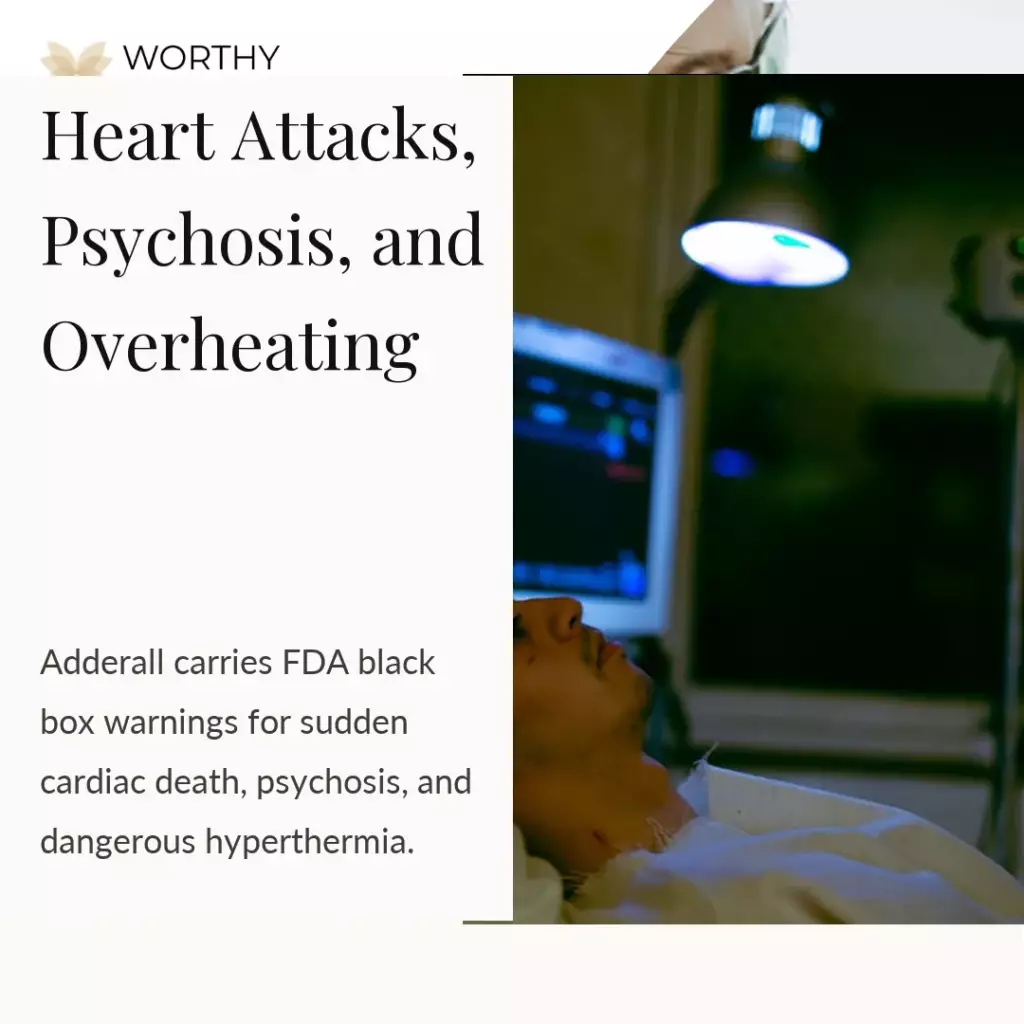
Immediate Health Risks of Adderall Use
- Cardiovascular events: Adderall increases heart rate and blood pressure; the FDA added a black box warning in 2006 noting increased risk of sudden death in patients with pre-existing cardiac abnormalities.
- Psychosis: High-dose stimulant exposure can induce amphetamine-induced psychosis, including paranoia, hallucinations, and disorganized thinking.
- Hyperthermia: Dangerously elevated body temperature can occur with high doses, particularly during physical activity.
Long-Term Health Effects of Adderall Use
Long-term Adderall misuse damages dopamine-producing neurons and alters the structure of the prefrontal cortex. A 2013 study in Neuropsychopharmacology found that chronic amphetamine exposure reduces dopamine transporter density in the striatum, a change associated with persistent emotional blunting and anhedonia (inability to feel pleasure).
What Are the Side Effects of Adderall in Men?
The side effects of Adderall in men are listed below:
- Erectile dysfunction from vasoconstriction
- Reduced testosterone production with prolonged use
- Increased aggression and irritability
- Elevated cardiovascular risk, particularly in men over 40
What Are the Side Effects of Adderall in Women?
The side effects of Adderall in women are listed below:
- More pronounced appetite suppression and weight loss compared to men
- Hormonal fluctuation effects: Estrogen levels affect Adderall metabolism, making effects stronger mid-cycle
- Higher sensitivity to cardiovascular side effects at equivalent doses (per body weight)
- Increased anxiety symptoms, especially in women with co-occurring anxiety disorders
What Is an Adderall Overdose?
An Adderall overdose occurs when the amount of amphetamine in the body exceeds what the cardiovascular and neurological systems can safely process. Overdose is possible at doses well above the therapeutic range and can be fatal.
Signs of Adderall overdose include:
- Rapid or irregular heartbeat (tachycardia/arrhythmia)
- Dangerously high blood pressure
- Seizures
- Hyperthermia (core temperature above 104°F)
- Psychosis or extreme agitation
- Loss of consciousness
Adderall overdose is a medical emergency. Call 911 immediately. There is no specific antidote; treatment is supportive and may include benzodiazepines for seizures, cooling measures for hyperthermia, and antihypertensives for blood pressure.
Is Adderall Addictive?
Yes. Adderall is addictive because it produces powerful dopamine surges that condition the brain’s reward circuitry to seek repeated use — the same neurological mechanism underlying all stimulant addictions. The DEA classifies Adderall as Schedule II specifically because of this high addiction potential.
How Quickly Can Someone Become Addicted to Adderall?
Some users develop compulsive adderall use patterns within weeks; others develop addiction gradually over months of escalating doses. Addiction timeline varies by individual, dose, and pattern of use. Misuse (taking doses above prescribed amounts, crushing/snorting, or taking without a prescription) dramatically accelerates the addiction timeline.
What Are the Risk Factors for Developing Adderall Addiction?
The risk factors for developing Adderall addiction include:
- Personal or family history of substance use disorder
- History of co-occurring mental health disorders (anxiety, depression, PTSD)
- Early initiation of stimulant use (adolescent or teen use)
- Misuse behaviors: taking higher doses, snorting, or using without a diagnosis
- High-stress environments that reinforce performance-driven use (academic, occupational)
Is Adderall Addictive If You Have ADHD?
People with ADHD who take Adderall as prescribed at therapeutic doses carry lower addiction risk than recreational users, because therapeutic doses normalize — rather than flood — dopamine levels.
However, addiction risk is not zero. A 2021 review in Current Psychiatry Reports found that individuals with ADHD have elevated rates of all substance use disorders, including stimulant misuse, and that misuse of their own prescriptions remains a clinical concern.
What Is Adderall Addiction?
Adderall addiction is clinically defined as Stimulant Use Disorder — a diagnosable psychiatric condition in which compulsive Adderall use continues despite significant harm to the individual’s health, relationships, and functioning.
What Are the DSM-5 Diagnostic Criteria for Stimulant Use Disorder?
The DSM-5 requires 2 or more of the following criteria within a 12-month period:
| Criteria Category | Example Behavior |
| Loss of control | Taking more Adderall than intended |
| Failed quit attempts | Repeated unsuccessful efforts to cut down |
| Time spent | Spending significant time obtaining, using, or recovering |
| Craving | Strong urges or desire to use |
| Role failure | Missing work, school, or obligations due to use |
| Social problems | Continued use despite interpersonal conflict |
| Withdrawal | Characteristic withdrawal symptoms |
| Tolerance | Needing increasing doses for the same effect |
Severity is rated mild (2–3 criteria), moderate (4–5 criteria), or severe (6+ criteria).
How Does Adderall Addiction Change the Brain?
Chronic Adderall misuse reduces the brain’s baseline dopamine function, effectively setting a new, lower “normal.” This neurological change explains why people in Adderall addiction:
- Cannot feel pleasure from ordinary activities (anhedonia)
- Experience intense cravings when the drug is absent
- Have impaired impulse control, making abstinence harder
- Suffer persistent depression and cognitive deficits during early recovery
What Is Adderall Abuse and How Does It Differ from Addiction?
Adderall abuse refers to any use outside of a valid prescription — including taking someone else’s prescription, using higher doses than prescribed, or using it recreationally for cognitive enhancement or weight loss.
Addiction (Stimulant Use Disorder) is defined by the loss of control over use and continued use despite harm. A person can abuse Adderall without meeting the criteria for addiction; all people with Adderall addiction engage in abuse.
What Are the Symptoms of Adderall Addiction?
The symptoms of adderall addiction are listed below:
Physical Symptoms of Adderall Addiction
- Significant unintentional weight loss
- Cardiovascular irregularities (elevated resting heart rate, high blood pressure)
- Skin picking or repetitive motor behaviors
- Disrupted sleep patterns; insomnia alternating with prolonged sleep crashes
Behavioral Warning Signs of Adderall Addiction
- Doctor shopping or obtaining Adderall from multiple prescribers
- Using Adderall to cope with stress rather than for its intended purpose
- Continuing use despite relationship, financial, or legal consequences
- Hiding use or becoming secretive about medication habits
Psychological Symptoms of Adderall Addiction
- Anxiety or panic attacks between doses
- Emotional blunting or inability to feel motivation without the drug
- Paranoia or obsessive thinking during use
- Severe depression or suicidal ideation during withdrawal or abstinence
What Are the Symptoms of Adderall Withdrawal?
The symptoms of adderall withdrawal are listed below:
- Profound fatigue and hypersomnia (sleeping 12–18 hours)
- Intense cravings for Adderall
- Depression, anhedonia, and emotional flatness
- Increased appetite and weight gain
- Cognitive slowing, poor concentration
How Long Does Adderall Withdrawal Last?
Acute Adderall withdrawal lasts 1–2 weeks, with peak symptoms occurring in days 2–4. Post-acute withdrawal syndrome (PAWS) — characterized by persistent low energy, depression, and cognitive difficulties — can persist for weeks to months after the acute phase. Medical supervision during withdrawal is strongly recommended.
What Causes Adderall Addiction?
Adderall addiction develops through the interaction of neurobiological, genetic, environmental, and psychological factors. At the neurobiological level, repeated dopamine flooding conditions the brain’s reward circuitry to associate Adderall with survival-level motivation. Genetic factors account for an estimated 40–60% of addiction vulnerability, according to the American Society of Addiction Medicine (ASAM). Environmental factors — high academic pressure, availability of the drug, peer use — accelerate exposure and misuse patterns.
What Are the Effects of Adderall Addiction on Health?
The effects of Adderall addiction on health are givene below:
- Cardiovascular: Chronic hypertension, arrhythmia, and elevated risk of heart attack or stroke.
- Neurological: Permanent reduction in dopamine receptor density; persistent cognitive impairment.
- Psychiatric: High rates of co-occurring major depressive disorder, anxiety disorders, and amphetamine-induced psychosis.
- Nutritional: Chronic malnutrition and immune suppression from appetite suppression and poor self-care.
- Social: Job loss, academic failure, and relationship breakdown driven by behavioral consequences of addiction.
How Is Adderall Addiction Diagnosed?
Adderall addiction is diagnosed by a licensed clinician — typically a psychiatrist, addiction medicine physician, or licensed counselor — using DSM-5 criteria for Stimulant Use Disorder. Diagnosis involves a clinical interview assessing use patterns, consequences, tolerance, withdrawal, and control.
Urine drug screening, medical evaluation for cardiovascular effects, and structured assessment tools (such as the AUDIT-C adapted for stimulants) support the diagnostic process.
What Are the Treatment Options for Adderall Addiction?
Adderall addiction treatment combines medically supervised withdrawal management with behavioral therapy in an appropriate level-of-care setting. There are no FDA-approved medications specifically for stimulant use disorder, making behavioral therapies the cornerstone of treatment.
How to Stop Taking Adderall Safely
To stop taking Adderall safely, follow a medically supervised taper that gradually lowers the dose, allowing the brain’s dopamine system to recalibrate and minimizing withdrawal symptoms such as fatigue, depression, and mood instability. Regular check-ins with a clinician monitor sleep, motivation, and emotional health, enabling early detection of depression or suicidal thoughts. This individualized approach enhances safety, comfort, and long-term recovery stability.
What Behavioral Therapies Are Used to Treat Adderall Addiction?
Behavioral therapies used to treat adderall addiction are listed below:
- Cognitive Behavioral Therapy (CBT): Identifies and restructures thought patterns that drive use; the most evidence-based therapy for stimulant use disorder.
- Contingency Management (CM): Uses incentive-based systems to reinforce abstinence; shown in multiple RCTs to be effective for stimulant disorders.
- Motivational Interviewing (MI): Resolves ambivalence about quitting and builds internal motivation for change.
- ADHD-Specific Counseling: Addresses underlying ADHD symptoms with non-stimulant medication alternatives (e.g., Strattera/atomoxetine, Wellbutrin/bupropion) for patients with a co-occurring diagnosis.
What Treatment Settings Are Available for Adderall Addiction?
Treatment settings available for adderall addiction are highlighted in the table below:
| Setting | Description | Appropriate For |
| Detox/Medical Withdrawal | 24/7 supervised stabilization | Severe dependence, psychiatric risk |
| Residential/Inpatient | Full-time structured treatment | Severe addiction, unstable environment |
| Partial Hospitalization (PHP) | 5–6 hours/day, 5 days/week | Moderate-severe, stable housing |
| Intensive Outpatient (IOP) | 3 hours/day, 3–5 days/week | Moderate addiction, working/school obligations |
| Standard Outpatient | Weekly therapy sessions | Mild disorder, strong support system |
How Do You Maintain Recovery and Prevent Relapse from Stimulant Use Disorder?
Long-term recovery from stimulant use disorder requires ongoing relapse prevention work, including:
- Participation in peer support groups (SMART Recovery, Narcotics Anonymous)
- Continued therapy to address underlying mental health conditions
- Lifestyle rebuilding: sleep hygiene, exercise, and nutrition restoration (all of which support dopamine system recovery)
- Environmental restructuring: removing access to Adderall, changing social networks that normalize use
How Can Adderall Addiction Be Prevented?
Adderall addiction canbe prevented by following the strategies listed below:
- Using Adderall only as prescribed, at prescribed doses, and communicating with prescribers about any misuse urges
- Educating students and young adults about the addiction risk of nonmedical stimulant use
- Prescribers routinely screening for misuse using tools like the NIDA Drug Use Screener
Is Adderall a Stimulant?
Yes. Adderall is a central nervous system (CNS) stimulant. It belongs to the amphetamine class of stimulants and increases the activity of dopamine and norepinephrine, producing heightened alertness and focus.
Is Adderall an Opioid?
No. Adderall is not an opioid. Opioids (such as oxycodone, heroin, and fentanyl) act on opioid receptors. Adderall acts on monoamine neurotransmitter systems (dopamine and norepinephrine) and belongs to the amphetamine class.
Is Adderall a Drug?
Yes. Adderall is a prescription drug (pharmaceutical). When used outside of a valid medical prescription for non-therapeutic purposes, it is also considered a controlled substance subject to federal drug law.
Is Adderall a Narcotic?
Adderall is not technically a narcotic. The term “narcotic” legally refers to opioids under the Controlled Substances Act. Adderall is a Schedule II stimulant, not a Schedule II narcotic, though it carries equivalent scheduling due to high abuse potential.
Do You Have to Take Adderall Every Day?
No. Some patients take Adderall only on days when ADHD management is needed (e.g., school days or work days), a practice called “drug holidays.” Daily use is determined by the prescribing clinician based on symptom severity, patient preference, and side effect profile.
Is Adderall a Psychiatric Medication?
Yes. Adderall is classified as a psychiatric medication. It is FDA-approved for ADHD, which is a neurodevelopmental psychiatric disorder, and is prescribed and managed by psychiatrists as well as primary care providers.
How Much Adderall Is Too Much?
Therapeutic doses range from 5–60 mg/day depending on age and indication. Doses above 60 mg/day significantly increase cardiovascular and psychiatric risk. There is no established universally safe upper limit for non-therapeutic use; even doses within the therapeutic range can be dangerous for people with cardiac abnormalities.
Is Adderall an Upper or Downer?
Adderall is an upper (stimulant). It accelerates CNS activity, increasing heart rate, blood pressure, alertness, and energy. Downers (depressants) — such as alcohol, benzodiazepines, and opioids — suppress CNS activity and produce sedation.
Summary
Adderall is a Schedule II prescription stimulant that treats ADHD and narcolepsy but carries a clinically recognized risk for tolerance, physical dependence, and Stimulant Use Disorder — a condition affecting millions of Americans that is treatable through behavioral therapies including CBT and contingency management.
Recovery from Adderall addiction starts with the right clinical support. Worthy Wellness Center provides individualized treatment for stimulant use disorder, combining evidence-based behavioral therapy with compassionate, professional care to help you reclaim control.
Sources: SAMHSA National Survey on Drug Use and Health (2021); JAMA Psychiatry (2018); American Society of Addiction Medicine (ASAM); DSM-5 (APA, 2013); FDA Adderall Prescribing Information; Neuropsychopharmacology (2013); Current Psychiatry Reports (2021).