No — while some individuals achieve cocaine sobriety without formal treatment, the data shows that attempting to overcome cocaine addiction without professional support significantly reduces long-term success and increases risk of relapse, severe psychological withdrawal, and overdose.
Research indicates that only 10–30% of people who attempt to quit cocaine without support maintain sobriety for six months or more, compared to a 50–60% success rate for those who complete a formal rehab program. According to the 2023 National Survey on Drug Use and Health (NSDUH), 55.8% of people with a substance use disorder also have a co-occurring mental illness — a dual diagnosis that makes unsupported self-recovery even less viable for most. Cocaine addiction restructures dopamine signaling in the brain, creating physical and psychological dependency that behavioral change alone rarely resolves.
Key Takeaways:
- Only 10–30% of people who quit cocaine without support stay sober for 6+ months; structured rehab improves that rate to 50–60%.
- Cocaine withdrawal is primarily psychological, but carries real risks including severe depression, suicidal ideation, and cardiovascular strain.
- Acute withdrawal symptoms typically last 3–4 days but psychological symptoms — cravings, anhedonia, mood instability — can persist for weeks to months.
- Cocaine activates the same dopamine reward pathways as food and survival behaviors, making cravings neurologically driven, not just a matter of willpower.
- More than half of people with cocaine use disorder have a co-occurring mental health condition that requires concurrent clinical treatment.
- Rehab provides structured detox, behavioral therapy (primarily CBT), and relapse prevention planning — none of which are accessible through self-directed recovery alone.
- Commitment to abstinence, self-efficacy, and self-help participation are the strongest predictors of sustained cocaine recovery in the research literature.
What Cocaine Addiction Does to the Brain

Cocaine addiction is a neurological condition — not simply a behavioral habit — in which the brain’s dopamine reward system becomes dependent on the drug to function. Cocaine blocks dopamine reuptake transporters in the brain, flooding the synapse with dopamine and producing intense euphoria. Repeated exposure causes the brain to downregulate its own dopamine production and receptor sensitivity, meaning the individual requires cocaine just to feel baseline normality.
According to the National Institute on Drug Abuse (NIDA), brain imaging studies show that cocaine use disrupts connectivity between the prefrontal cortex and limbic system — the regions governing decision-making, impulse control, and emotional regulation. These structural changes explain why individuals with cocaine use disorder experience loss of control over use even when aware of the consequences. Cocaine addiction is classified as a chronic, relapsing brain disorder, not a failure of willpower.
Why Quitting Cocaine Alone Is Difficult
Quitting cocaine without professional help is difficult for reasons that are biological, psychological, and environmental. The neurological changes caused by chronic cocaine use create drug-seeking behavior that operates below conscious awareness — triggered by cues in the environment, stress, and emotional states associated with past use.
The core barriers to self-directed cocaine recovery include:
- Dopamine dysregulation — the brain cannot produce adequate dopamine without cocaine, generating persistent anhedonia (inability to feel pleasure) that drives relapse
- Psychological cravings — cocaine cravings are neurologically driven and can be triggered by stress, people, places, and sensory cues associated with use
- Co-occurring mental health disorders — anxiety, depression, and trauma frequently underlie cocaine use and remain untreated without clinical intervention
- Lack of structure and accountability — recovery requires behavioral restructuring that self-directed attempts rarely provide consistently
- Addiction transfer risk — without professional guidance, individuals commonly shift dependency to alcohol, benzodiazepines, or other substances to manage withdrawal discomfort
A review published in PMC found that individuals with higher self-efficacy, self-help participation, and active coping strategies had better cocaine abstinence outcomes — but these skills are typically developed within a structured treatment environment, not prior to it.
Cocaine Withdrawal Symptoms Without Professional Support
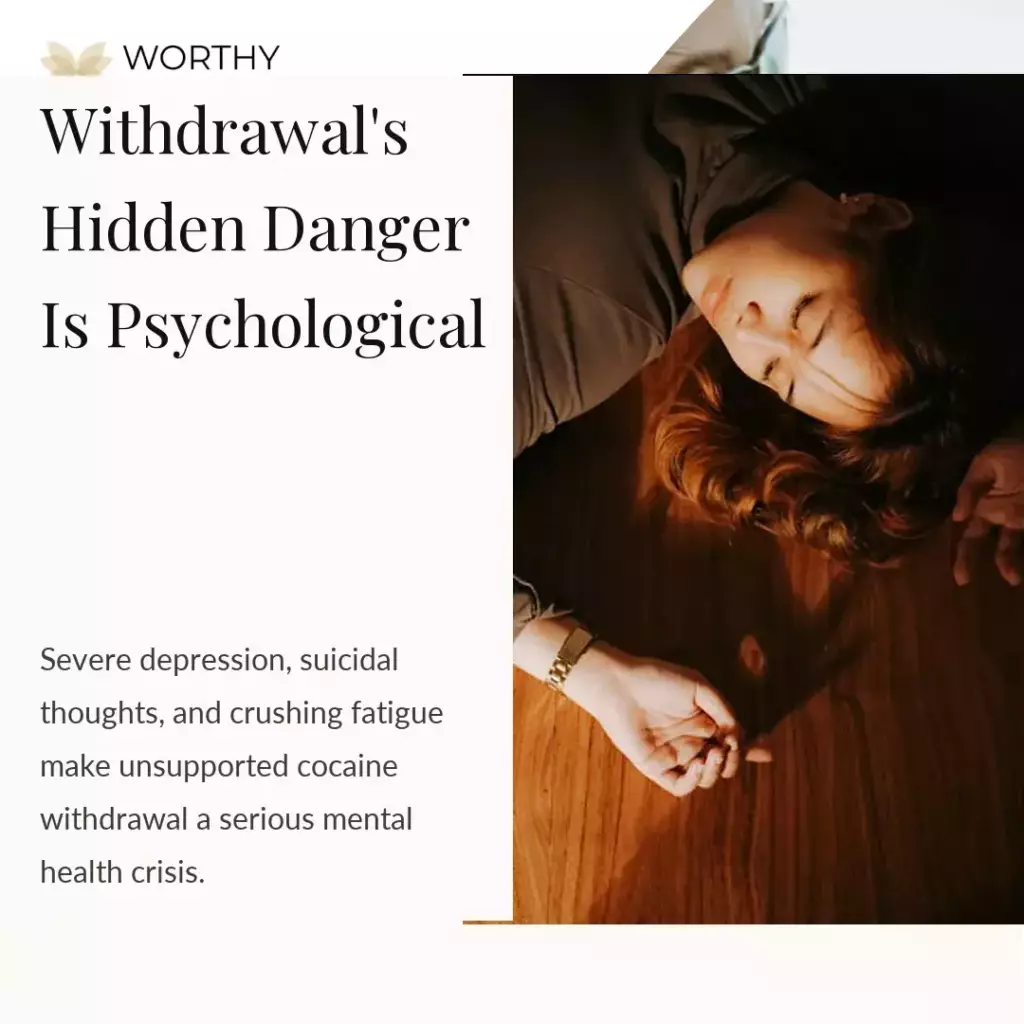
Cocaine withdrawal is primarily psychological, but its symptoms are intense enough to drive rapid relapse without clinical support. Unlike alcohol or opioid withdrawal, cocaine withdrawal does not typically cause life-threatening physical symptoms — but the psychological risks, including suicidal ideation and severe depression, are clinically significant.
According to MedlinePlus, cocaine withdrawal symptoms include:
- Intense cravings for cocaine that can persist for weeks
- Fatigue and hypersomnia — the body crashes following dopamine depletion
- Dysphoric mood and depression — including suicidal thoughts in severe cases
- Anxiety, irritability, and agitation
- Anhedonia — loss of interest in activities that previously provided pleasure
- Cognitive impairment — difficulty concentrating and slowed thinking
- Paranoia and psychotic symptoms in cases of prolonged or high-dose use
The acute phase of withdrawal typically lasts 3–4 days for moderate users, with symptoms potentially persisting up to 4 weeks for heavy users. Post-acute withdrawal syndrome (PAWS) — characterized by lingering fatigue, mood instability, and intermittent cravings — can extend for months beyond acute detox. Attempting to navigate this timeline alone significantly increases relapse risk, particularly during the first two weeks when symptoms are most intense.
What Happens When Cocaine Addiction Goes Untreated
Untreated cocaine addiction causes progressive physical and psychological deterioration. Cardiovascular damage is among the most serious consequences — cocaine is associated with increased risk of heart attack, stroke, and cardiac arrhythmia even in young, otherwise healthy individuals. Chronic use causes structural changes to the nasal passages, lungs, and liver depending on the route of administration.
Psychologically, untreated cocaine addiction deepens co-occurring disorders including depression, anxiety, and psychosis. Research from the NSDUH (2023) confirms that 55.8% of the 48.7 million Americans with a substance use disorder also had a diagnosable mental illness — a rate that rises with the duration of untreated addiction. Without clinical intervention for both conditions simultaneously, recovery from either is substantially less likely. Social consequences — including relationship dissolution, employment loss, legal problems, and financial damage — compound over time and reduce the social support infrastructure that recovery depends on.
Signs That Professional Rehab for Cocaine Addiction Is Needed

Not every person who uses cocaine requires inpatient residential treatment, but the following factors indicate that professional rehab — at any level of care — is clinically warranted:
- Daily or binge-pattern use that has continued despite negative consequences
- Failed self-quit attempts — previous attempts to stop without sustained success
- Co-occurring mental health conditions such as depression, PTSD, or anxiety that overlap with cocaine use
- Polysubstance use — using cocaine alongside alcohol, benzodiazepines, or opioids
- Withdrawal symptoms including severe depression, suicidal thoughts, or cardiovascular stress
- Social or occupational impairment — cocaine use interfering with work, relationships, or legal standing
- Loss of control over use — inability to stop despite wanting to
The presence of any of these factors substantially reduces the probability of sustained self-directed recovery and increases the clinical appropriateness of structured treatment.
How Rehab Treats Cocaine Addiction
Rehab treats cocaine addiction through a structured combination of detox, behavioral therapy, dual diagnosis care, and relapse prevention planning. There are no FDA-approved medications specifically for cocaine withdrawal, making behavioral treatment the primary clinical tool — which is why a structured therapeutic environment is central to recovery outcomes.
The core components of cocaine addiction treatment in rehab include:
- Medical detox — supervised withdrawal management with monitoring for cardiovascular risk, suicidal ideation, and psychotic symptoms; supportive medications (antidepressants, sleep aids, anti-anxiety agents) may be used as indicated
- Cognitive Behavioral Therapy (CBT) — the most evidence-supported behavioral therapy for cocaine use disorder; addresses distorted thinking, trigger identification, and coping skill development
- Contingency management — behavioral reinforcement strategies shown in multiple studies to reduce cocaine use during treatment
- Dual diagnosis treatment — concurrent psychiatric care for co-occurring depression, anxiety, trauma, or PTSD
- Group therapy and peer support — reduces isolation and builds accountability through shared recovery experience
- Aftercare and relapse prevention planning — structured exit plan including outpatient therapy, support groups (Cocaine Anonymous, SMART Recovery), and trigger management strategies
According to SAMHSA’s 2022 Treatment Episode Data Set (TEDS), approximately 55% of individuals discharged from cocaine treatment successfully completed their program or were transferred to higher levels of care — a rate that far exceeds unsupported self-recovery outcomes.
What to Look for in a Cocaine Addiction Treatment Program
Choosing the right level of care depends on the severity of the addiction, the presence of co-occurring disorders, and the individual’s existing support structure. Treatment options exist on a continuum:
- Medical detox (inpatient or outpatient) — appropriate first step for active daily users or those with polysubstance dependence
- Residential / inpatient rehab — 24/7 structured environment; recommended for severe addiction, failed outpatient attempts, or unstable home environments
- Partial Hospitalization Program (PHP) — intensive structured treatment during the day with the option to return home in the evening
- Intensive Outpatient Program (IOP) — several hours of weekly treatment while maintaining daily life responsibilities
- Outpatient treatment — ongoing therapy and monitoring for individuals who have completed higher levels of care
A quality treatment program should offer individualized care planning, licensed clinical staff, dual diagnosis capability, evidence-based behavioral therapies, and an aftercare plan — not simply detox and discharge.
Summary
Overcoming cocaine addiction without rehab is possible for a small minority, but the evidence consistently shows that professional treatment significantly improves long-term sobriety outcomes and reduces the health risks that unsupported withdrawal carries.
At Worthy Wellness Center in Carlsbad, California, a certified addiction treatment program for women offers personalized cocaine addiction care — including detox services, PHP, IOP, and outpatient treatment — with evidence-based therapies and dual diagnosis support. If you or someone you care about is struggling with cocaine use, Worthy Wellness Center can help you find the right level of care.
Sources:
- MedlinePlus — Cocaine Withdrawal
- National Institute on Drug Abuse (NIDA) — Cocaine Research Topics
- SAMHSA 2022 TEDS Report — via AddictionHelp.com — Addiction Recovery Statistics
- PMC — Factors in Sustained Recovery from Cocaine Dependence
- PMC — Probability and Predictors of Remission from Cocaine Dependence (NESARC)
- Rehabs UK — Can You Overcome Cocaine Addiction Without Rehab?
- The Recovery Village — Cocaine Withdrawal and Detox